Categories
Artworks Recent Works

BREAKING THE WHEEL OF SAMSARA

The Bhagavad Gita addresses the concept of the cycle of birth, death and rebirth, which is central to the Vedic philosophy and is known as “Samsara”. This cycle is based on the idea that the soul (Atman) is eternal but becomes entangled in a cycle of reincarnation, moving from one body to another after death. Throughout the Bhagavad Gita, Lord Krishna imparts spiritual wisdom and guidance to break painful circle of repeated births and deaths and to attain spiritual enlightenment and liberation from the cycle of rebirth. Lord Krishna explains the significance of various paths to spiritual enlightenment and suggests that the path of devotion (Bhakti Yoga) is the most accessible and effective for many individuals. The four paths mentioned in Bhagavadgita are: 1. Path of Knowledge (Jnana Yoga) 2. Path of Devotion (Bhakti Yoga) 3. Path of Action (Karma Yoga) 4. Path of Meditation (Dhyana Yoga) Lord Krishna’s teaching in the Bhagavad Gita acknowledges the diversity of human temperament and provides different paths for seekers to choose from based on their inclinations and capabilities.

Categories
Artworks Recent Works

LIFE’S PERPETUAL CIRCLE

dehino ‘smin yathā dehe kaumāram yauvanam jarā tathā dehāntara-prāptir dhīras tatra na muhyati Bhagvadgita (2.13) says that as the embodied soul continually passes, in this body, from boyhood to youth to old age, the soul similarly passes into another body at death. The self-realized soul is not bewildered by such a change. In this verse, Lord Krishna explains the concept of the eternal soul (Atman) and its journey through different phases of life and death. This verse underscores the importance of spiritual wisdom and selfrealization in transcending the fear and confusion associated with the cycle of birth and death, ultimately leading to liberation (moksha) from the material world.

Categories
Artworks Recent Works

Serenity

In Vedic literature, a human is advised to be like the lotus; they should work without attachment, dedicating their actions to God, untouched by sin like water on a lotus leaf, like a beautiful flower standing high above the mud and water.

Categories
Artworks Recent Works

Calm

In Vedic literature, a human is advised to be like the lotus; they should work without attachment, dedicating their actions to God, untouched by sin like water on a lotus leaf, like a beautiful flower standing high above the mud and water.

Categories
Artworks Recent Works

Peace

In Vedic literature, a human is advised to be like the lotus; they should work without attachment, dedicating their actions to God, untouched by sin like water on a lotus leaf, like a beautiful flower standing high above the mud and water.

Categories
Artworks Recent Works

Divinity

In Vedic literature, a human is advised to be like the lotus; they should work without attachment, dedicating their actions to God, untouched by sin like water on a lotus leaf, like a beautiful flower standing high above the mud and water.

Categories
Artworks Recent Works

Trance

In Vedic literature, a human is advised to be like the lotus; they should work without attachment, dedicating their actions to God, untouched by sin like water on a lotus leaf, like a beautiful flower standing high above the mud and water.

Categories
Artworks Recent Works

BLOSSOMING SOULS

In Vedic literature, a human is advised to be like the lotus; they should work without attachment, dedicating their actions to God, untouched by sin like water on a lotus leaf, like a beautiful flower standing high above the mud and water.

Categories
Artworks Recent Works

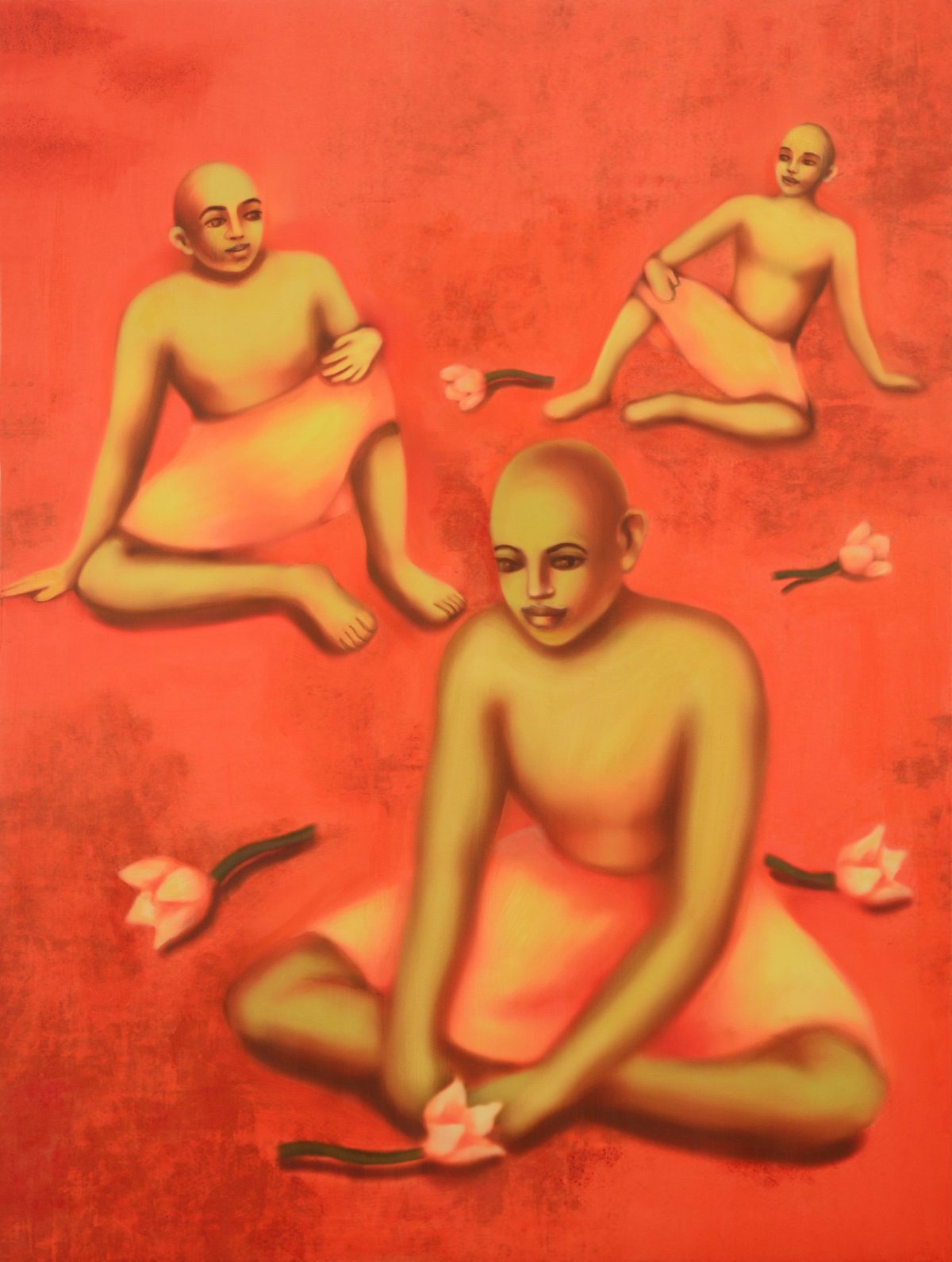
THE MONASTIC TRIO

A monk is someone who intelligently and diligently strives for the purest, most enlightened state of consciousness. He takes this to be his primary duty as a human being, and rightly so. He seeks to perfect his consciousness in order to taste the most sublime ecstasy of pure love for God. One does not have to become a monk in order to achieve this, but monk life especially facilitates progress towards spiritual realization.

Categories
Artworks Recent Works

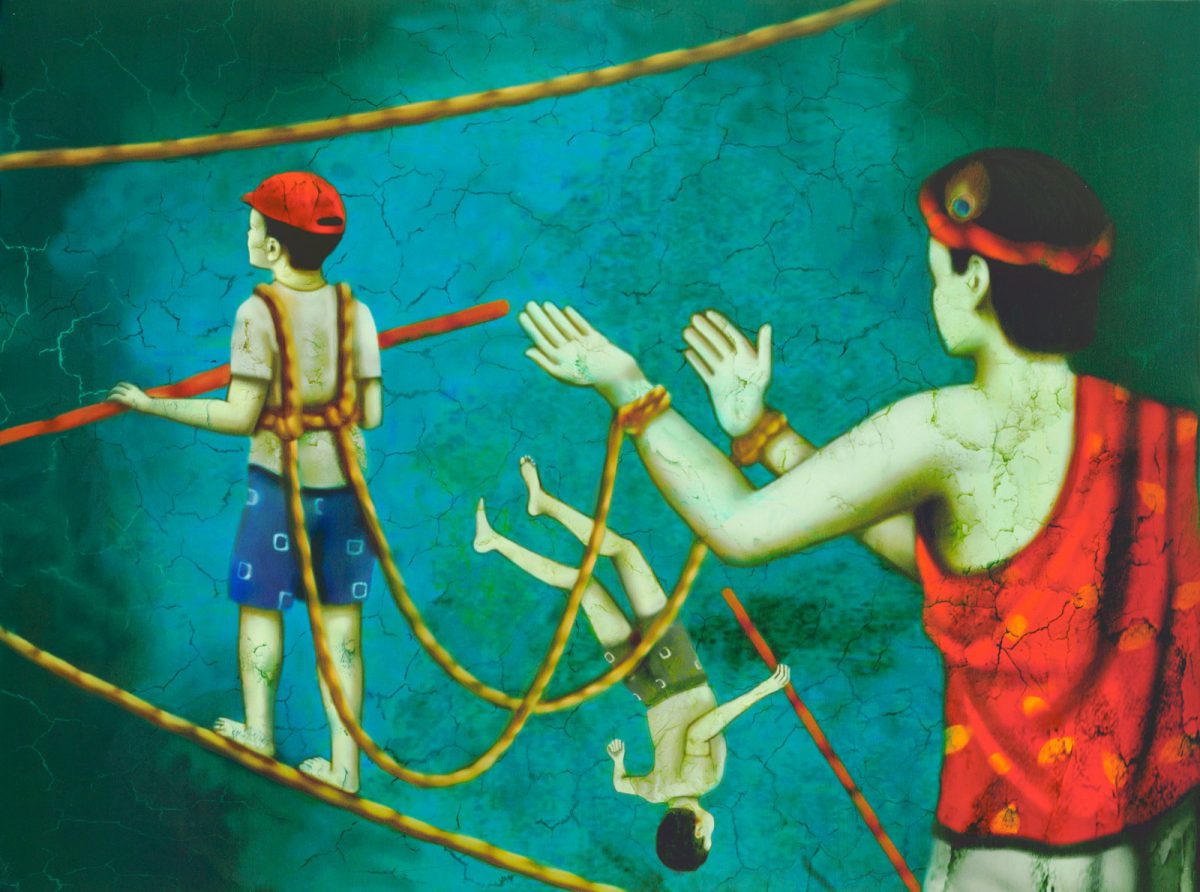
EQUANIMITY

In Bhagavadgita Lord Krishna says ‘sukha-duhkhe same krtvā’ (2.38) meaning treating happiness and sorrow equally. This concept is often associated with the practice of equanimity or maintaining a balanced and composed state of mind regardless of external circumstances. In Bhagavadgita (9:31) Lord Krishna declares ‘na me bhaktah pranaśyati’ “My devotee never perishes.” Those who have taken the shelter of Lord or who are unalloyed devotees of Lord Krishna do not perish/fall. In Srimad Bhagvatam (9.4.63) Lord Krishna is declaring His relationship with His devotees. He refers to Himself as “bhakta-parādhīna,” which means “I am under the control of my devotees.” This is a profound statement, highlighting the importance of devotion and the reciprocal relationship between God and His devotees. In Bhagvad Gita, at multiple places, Lord Krishna assures protection to his devotees. He says that for someone who has taken His shelter ‘Lord carries what he lacks and preserves what he has.’ In essence, life often resembles a precarious tightrope walk, where maintaining a harmonious perspective amid life’s joys and sorrows aids in successfully traversing it. Moreover, individuals who seek refuge in Lord Krishna find themselves enveloped in a protective safety net, ensuring that they do not stumble or fall along their journey